Zencora Academy

Module M5 reading edition · Foundation tier · 9 chapters · about 39 minutes of reading

The Vagus Nerve, HRV and Autonomic Regulation

What the vagus nerve is, how controlled five-minute ECG rMSSD indexes cardiac vagal activity, how the calculation works, the limits of shorter consumer-sensor readings, and how to observe whether beat-interval timing changes while a client follows a slow-breathing pacer on a live trace.

Reading edition. This complete manuscript has passed Zencora's structural checks but has not completed claim-by-claim scientific verification, independent review, or the Academy's sellable-module gate. It is sold as reading access only and does not count toward a certificate or platform authorization. Buyers receive the verified revision when it is released.

Chapters 1 and 2 are open. Chapters 3 to 9 arrive with your access link after enrollment.
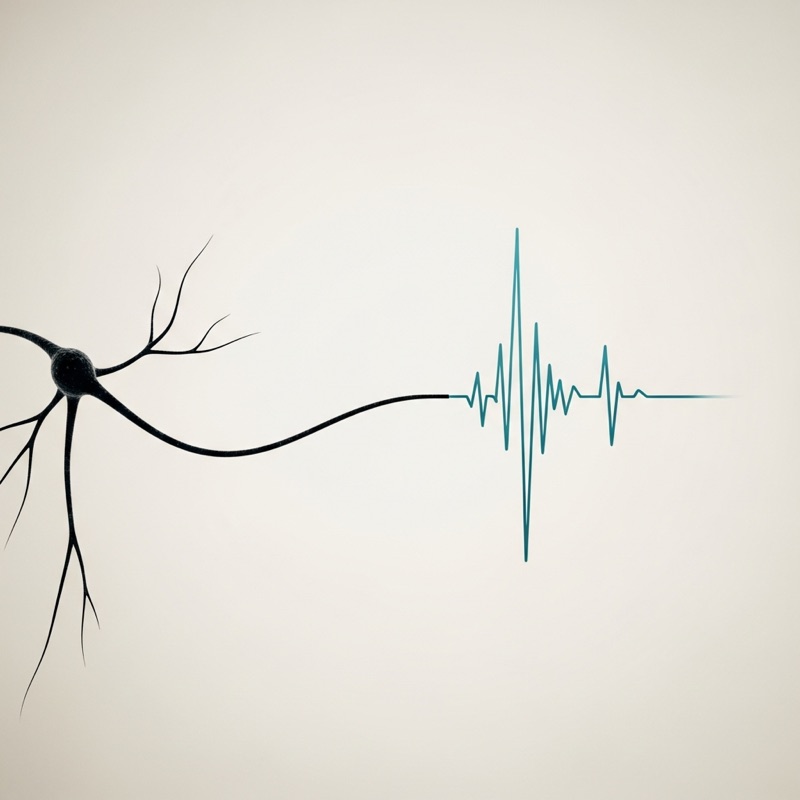
Module illustrationIllustration, not a measurement.
Chapters
  1. What the vagus nerve is and what it doesfree
  2. Heart rate variability and respiratory sinus arrhythmiafree
  3. How rMSSD is calculated and what it cannot show
  4. Slow exhale-biased breathing and the baroreflex
  5. Tools with evidence for raising heart-rate oscillation
  6. Tools without evidence: what the grades say
  7. Implanted vagus nerve stimulation and the wellness-practice boundary
  8. Cold exposure, the dive reflex, and safety limits
  9. How a regulation coach speaks at the chair

Chapter 1: What the vagus nerve is and what it does

Put two fingers on the side of your neck, or on the inside of your wrist, and find your pulse. Hold there for fifteen seconds. It feels steady — a clean, reliable beat, like a clock ticking somewhere under the skin. Trust that feeling for a moment, because it is about to become the most useful mistake your body will ever hand you as a coach.

The steadiness is an illusion. If we could zoom into the gaps between your beats and measure them in milliseconds, we would find that no two are the same. One gap might run 860 milliseconds, the next 910, the one after that 845. Your pulse is not keeping time. It is negotiating, a little differently with every beat, and you cannot feel the negotiation at all. Something is quietly adjusting the tempo of your heart right now, in this breath — and to understand what it is, you have to meet a nerve.

Run your attention from the base of your brain, down through your neck, into your chest, and out across your heart and lungs, and then keep going — all the way down into your gut. That path is a real anatomical structure: the tenth cranial nerve, the vagus. The name is Latin for wandering, and it earned it. Of the twelve cranial nerves, this is the one that refuses to stay near the head. It wanders farther than any other, branching across the organs that keep you alive. It is the main cable of your parasympathetic nervous system — the recovery side, the part of you that handles rest, digestion, and calm.

Here is one clean image to carry the idea, and then I am going to take it back. Imagine two hands resting on the shoulders of your heart. One hand is the sympathetic system — the accelerator. Adrenaline, alertness, get-ready. The other hand is the vagus — the brake. Watch how the brake tracks your breath: when you breathe in, its pressure eases and your heart quickens slightly; when you breathe out, it presses again and your heart slows. That rhythmic speeding and slowing, locked to your breathing, has a name — respiratory sinus arrhythmia — and it is the wandering nerve made visible in your own pulse.

Now I retire the brake, precisely here, because if you keep leaning on it you will start to believe something false. A brake is either on or off, and you press it moment to moment. The vagus is not like that. It holds a steady background pressure on your heart all day long — a resting tone that quietly sets how fast your heart idles — and on top of that it flutters with each breath. Two different things: the steady hand and the fluttering fingers. The breath-linked flutter you can watch is only the surface of it. Keep the words tone for the steady part and respiratory sinus arrhythmia for the flutter. Drop the idea that it is one simple pedal you stamp. The real machinery is layered, and the layering is the point.

I want to be precise about what kind of claim I have made, because that precision is your whole craft. Everything about the anatomy — the vagus is cranial nerve X; it branches across the heart, lungs, and gut; it holds a resting tone and modulates with the breath — is fact, described in every anatomy text, and you can state it as flatly as you would state where your own ribs are. But one downstream claim here is already strong enough to grade, and you should lean into it rather than defer it: the beat-to-beat variation you just met, measured as heart-rate variability (HRV), is a well-validated, robustly replicated index of vagal activity and stress recovery. That is grade A — the solid ground this whole book stands on. When you watch those gaps shift from 860 to 910 to 845 milliseconds, you are watching a genuine, measurable signal, not a hopeful proxy. The further questions — what breathing this nerve on purpose does to how a person feels over weeks — carry their own honest grades as they arrive in later chapters. But the measurement itself is A, and you should say so without hedging.

Now the fact that makes the rest of the book possible. You would assume a nerve running from brain to organ is a command line — the brain issuing orders downward. It is not, or at least not mostly. By the commonly cited estimate, roughly eighty percent of the vagus’s fibers are afferent — they run the other way, carrying information up from the heart, lungs, and gut to the brain. Hold that number honestly, the way you will have to when a client challenges you: eighty percent is the standard figure, but the real sources put it in a 65 to 85 percent band, not at a hard constant. Say “the commonly cited estimate,” not a decimal you would defend to the wall. What survives the caveat is the direction, and the direction is the point: the vagus is mostly a listening cable, a sensory nerve first. This is the mechanistic reason a slow breath can reach your brain at all — because there is a physical wire pointing up it, waiting to carry the message. You are not talking yourself calm. You are sending a signal up a real nerve.

At the chair. A client asks you, plainly, “What is the vagus nerve?” You have ninety seconds and no notes, and you do not need to reach for anything but the truth: “It’s the tenth of your cranial nerves, and its name means ‘wandering’ — because it’s the one that wanders, running from your brainstem all the way down through your chest and into your gut. It’s the main cable of your body’s rest-and-recovery side. It’s quietly slowing your heart down all day, and it also flutters with your breath — easing off a little when you breathe in, pressing a little when you breathe out. And here’s the part most people never hear: it’s mostly a listening nerve. About eighty percent of it, by the usual estimate, carries information up to your brain, not commands down. That’s why your breath can actually reach the rest of you — and it’s why we can measure this. The beat-to-beat wobble in your pulse is a real, well-established readout of that nerve at work.” No diagnosis in that. No treatment. Just a wandering nerve, mostly listening.

So keep your fingers on your pulse a moment longer. What feels like a steady clock is a nerve you can measure but never command into silence — a signal running up into the dark, into a brain that is listening far more than it is speaking. We can watch that signal. We have not yet earned the right to say what moving it, on purpose, will reliably do to a life. That gap between what we can measure and what we can promise is the keyhole this whole book looks through — and every honest thing you will ever tell a client lives on the near side of it.


Chapter 2: Heart rate variability and respiratory sinus arrhythmia

The gap you found in Chapter 1 — the one hiding under a pulse that felt like a clock — turns out to have a shape, and the shape is the whole subject of this chapter. Zoom back into those intervals between beats: one runs 860 milliseconds, the next 910, the one after 845. The beat you feel as a metronome is actually a living negotiation, adjusting itself dozens of times a minute. The unevenness you can’t feel is not a flaw in the signal. It is the signal.

Those shifting gaps between heartbeats are called inter-beat intervals, and the pattern of their variation is heart rate variability — HRV. When you watch a live trace jitter up and down, you are not watching a malfunction. You are watching your autonomic nervous system do its job in real time: the sympathetic branch nudging the rate up, the vagus — the parasympathetic brake from Chapter 1 — easing it back down. The two are in constant conversation, and HRV is the transcript.

The clearest voice in that transcript is your breath. Watch closely and you’ll see the heart speed up slightly as you inhale, then slow as you exhale. Inhale, faster; exhale, slower. This is respiratory sinus arrhythmia — RSA — the same breath-linked flutter you named in Chapter 1, now read as a measurement. On the inhale, vagal tone briefly withdraws and the heart quickens; on the exhale, the vagus reasserts its brake and the heart eases. That RSA reflects vagal activity is not a fringe idea or a hopeful correlation. It is well-established physiology, grade A — the mechanism is robustly replicated and directly measurable. When you slow and lengthen your exhale, you are leaning on that brake on purpose, which is exactly why the long exhale of Chapter 4 does what it does.

Here is the counterintuitive core, the thing most people have backwards. More variability is the healthier sign. A body whose inter-beat gaps swing freely — 860, then 910, then 845 — is a body still listening and adjusting, moment to moment, to breath and posture and thought. A heart whose beats begin marching toward identical, gap after gap the same, is a body that has stopped adjusting. In the language of the brake: a firm, responsive brake produces high variability, because it is being applied and released constantly. A stiff brake, stuck in one position, produces beats that barely move.

Picture, just for a moment, two hands resting on the heart’s shoulders — one that presses and lifts with every breath, and one clamped rigid. That is the whole idea. Now set the hands down and keep the real terms, because the metaphor is a doorway, not the house: what actually presses and lifts is vagal tone, and what you measure is the spread of your inter-beat intervals.

Say the strength plainly, and say the edge just as plainly. HRV as a within-person index of vagal activity and recovery state is grade A — one of the best-replicated findings in autonomic science. But “more variability is healthier” is a truth about you across your own days, not a leaderboard against other people. Your numbers depend on your age, your posture, whether you’re standing or lying down, how you were breathing in that moment, even the hour. A single reading is never a verdict. It’s a data point on your own curve, and the curve is what talks. Anyone selling you a population percentile is selling you certainty the data doesn’t contain.

At the chair. A client is watching their live trace flicker and the line won’t hold still. They glance up, a little worried, and ask if all that jitter means something’s wrong. Here’s what you can say, staying entirely in wellness language: “That movement is exactly what we want to see. A heartbeat that’s constantly adjusting is a nervous system that’s paying attention and staying flexible. The thing we’d actually notice would be the opposite — a line that went flat and even, beat after beat the same. So let the trace wander. That wandering is the healthy part. Let’s watch how it changes when you lengthen your exhale.” No diagnosis, no verdict — just the honest read of what the movement means.

One more line to draw, because it will govern the rest of the module. The implanted vagus nerve stimulator — the surgically wired lineage you will meet in full in Chapter 7 — is an FDA-regulated medical device that drives the nerve directly with current. That is medicine, and it stays in a surgeon’s and a physician’s hands. What you do at the chair is different in kind: you teach non-invasive self-regulation and you measure it with HRV. You are not stimulating the nerve. You are helping someone find the breath and the state that let their own brake work well, and then you watch the beats spread out to prove it.


Chapter 3 · included with the reading edition

How rMSSD is calculated and what it cannot show

About 4 minutes of reading.

Chapter 4 · included with the reading edition

Slow exhale-biased breathing and the baroreflex

About 4 minutes of reading.

Chapter 5 · included with the reading edition

Tools with evidence for raising heart-rate oscillation

About 4 minutes of reading.

Chapter 6 · included with the reading edition

Tools without evidence: what the grades say

About 5 minutes of reading.

Chapter 7 · included with the reading edition

Implanted vagus nerve stimulation and the wellness-practice boundary

About 4 minutes of reading.

Chapter 8 · included with the reading edition

Cold exposure, the dive reflex, and safety limits

About 5 minutes of reading.

Chapter 9 · included with the reading edition

How a regulation coach speaks at the chair

About 4 minutes of reading.

Request the reading edition, $149